
Title: Imperator Triumphus and the Golden Tax Decree: A Historic Shower of Prosperity
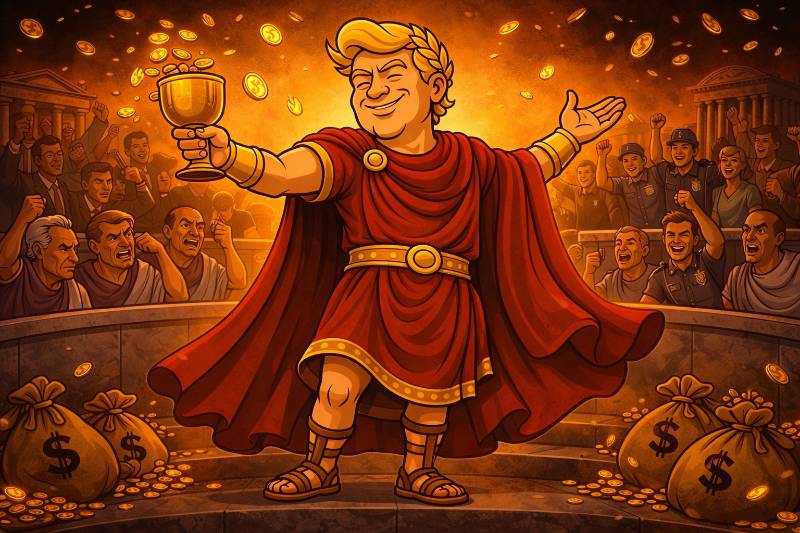
The Grand Tax Triumph of the Empire: How Imperator Donaldus Triumphus Showered the People with Golden Relief (While the Senate of Democratus Looked On in Horror)
In the gleaming marble halls of the modern republic—now increasingly resembling an empire with excellent branding—rose once more the unmistakable figure of Imperator Donaldus J. Triumphus Maximus, champion of the working masses, self-declared guardian of prosperity, and undisputed master of the fiscal spectacle.
With the confidence of a ruler who has never met a superlative he didn’t like, he unleashed his signature decree: the “Working Families Tax Cuts.” A legislative monument so grand, so powerful, that—according to imperial scribes—it has single-handedly restored wealth, dignity, and possibly even better moods at dinner tables across the land.
Naturally, the opposition—known throughout the empire as the united faction of Democratus Perpetual Oppositionis—rose in perfect synchronization to reject it. Every. Single. One. A performance so coordinated it could qualify as a choreographed protest.
Yet, as history (or at least official press releases) would have it, the results are nothing short of legendary.
Scrolls of data—carefully curated and triumphantly presented—reveal that tax refunds have surged by nearly 11%, with average returns exceeding $3,700. A figure so satisfying it almost convinces citizens they’ve discovered free money, rather than receiving a portion of what was already theirs.
Even more impressive is the decree abolishing taxes on overtime. Nearly 20 million hardworking citizens have embraced this policy, transforming extra hours from a necessary burden into a semi-celebrated opportunity. Factory workers, line technicians, police officers, and nurses now labor longer with the comforting knowledge that at least the tax collector is taking a brief nap.
Not to be outdone, the elimination of taxes on tips has sparked jubilation among service workers—those heroic figures whose income has always depended on the generosity (or questionable math skills) of strangers. Over 4.6 million citizens have benefited, turning gratuities into something far more glorious: untouchable income.
Nearly half of all taxpayers have already claimed at least one of these imperial blessings. The other half, presumably, are still searching for the correct checkbox.
Meanwhile, small business owners—those brave gladiators of spreadsheets and invoices—have reportedly experienced tax reductions averaging nearly $7,000. Add to that the permanent extension of the 20% income deduction, delivering another $4,600 in relief for millions of entrepreneurs, and you have a narrative so compelling it practically applauds itself.
But the empire did not stop there.
Through the restoration of immediate deductions for research and development expenses—applied retroactively, because why not—businesses are now unlocking an estimated $100 billion in prior-year deductions. A number so vast it feels less like a policy outcome and more like a budgetary hallucination.
Full expensing rules allow companies to write off investments instantly, improving cash flow and fueling expansion. Or, in simpler terms: spend now, deduct now, celebrate immediately.
And then come the so-called “Triumphus Accounts” for children—because nothing says long-term vision like introducing fiscal branding at birth. Over four million young citizens are already part of this grand financial narrative, learning early that even savings can carry a political signature.
The official message is clear, bold, and repeated with the consistency of a campaign slogan: work should be rewarded, not punished. Growth should be unleashed, not restricted. And anyone opposing this vision—well, they clearly stood in the way of greatness.
Yet somewhere beneath the roaring applause, the gleaming statistics, and the carefully staged victories, a quieter thought lingers:
Is this truly an era of unprecedented relief—or a masterclass in political storytelling, where every number doubles as both evidence and applause?
In the world of Imperator Donaldus Triumphus Maximus, the answer hardly matters. There are no small wins. Only historic triumphs, monumental success—and always, always someone who voted against it.