
Trumpius Caesar and the Pipeline of Destiny – America’s Most Glorious Permit Ever Signed
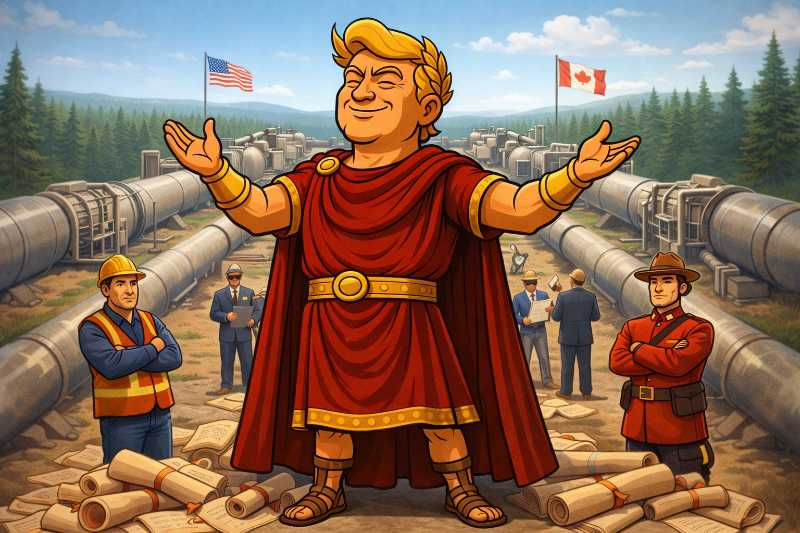
Trumpius Caesar and the Grand Pipeline Decree – A Monument to Power, Oil, and Paperwork
On a day when even the eagles circled with a hint of administrative respect, Emperor Donaldus Trumpius Caesar Maximus rose from his gilded desk, lifted a pen of unmatched brilliance, and delivered what historians will one day describe as the most magnificently detailed permission slip ever written.
Far to the north, where the lands of the United States meet the frost-forged dominion of Canada, lies a mighty artifact of modern civilization: a 12-inch pipeline near Portal, North Dakota. Through it flows the lifeblood of industry—crude oil, gasoline, jet fuel, diesel, and every imaginable liquid that makes engines roar and economies hum.
But this pipeline carried a burden. It was born in a distant age—1996—an era of dial-up internet, questionable fashion choices, and permits that lacked the proper imperial flair.
Trumpius Caesar saw this injustice and declared:
A pipeline of such greatness must not merely exist—it must be glorified through paperwork.
And so, with a decree of breathtaking length and theatrical authority, he issued the Presidential Permit Supreme, renewing and redefining the pipeline’s right to operate. Not just a permit—no—this was a declaration of dominion over steel, soil, and bureaucracy itself.
The Bakken Pipeline Company LP, a name as grand as it is slightly exhausting to say out loud, was granted the right to continue operating and maintaining this noble conduit. But, as with all things under Trumpius Caesar, the gift came wrapped in conditions of heroic complexity.
Article I: The Sacred Stability Clause
The pipeline may remain as it is—strong, proud, and immovable—unless the Emperor himself approves changes. However, increasing flow or reversing direction? Entirely acceptable. Flexibility, after all, is the backbone of greatness.
Article II: The Parade of Inspectors
Federal, state, and local officials may arrive at any time, armed with clipboards and determination. They shall be granted full access, and the operator shall greet them with the enthusiasm of someone who absolutely expected this visit.
Article III: The Vanishing Act
Should the permit ever end, the pipeline must disappear—at the operator’s expense. Failure to comply will result in the state stepping in, removing it, and sending a bill so impressive it could qualify as modern art.
Article IV: The National Security Override
If the Emperor deems it necessary for national security, the United States may take control of the pipeline. Temporarily, of course. With compensation. Probably. Eventually.
Article V: The Name Game
Change ownership? Change the name? Notify the throne immediately. The Emperor must always know who holds dominion over the pipe.
Article VI: The Responsibility Avalanche
Everything—maintenance, safety, environmental protection—is the operator’s responsibility. Should anything go wrong, the official position is clear:
“That sounds like a you problem.”
Articles VII & VIII: The Endless Scroll of Reporting
Reports must be filed. Data must be shared. Information must flow—almost as reliably as the oil itself.
Article IX: The Philosophical Finale
Despite its grandeur, this decree creates no enforceable rights against the United States. It is, in essence, a masterpiece of authority without accountability—a true work of bureaucratic art.
At last, Trumpius Caesar placed his signature upon the document, sealing its power for the ages. The pipeline would continue to operate, now under the protective shadow of an edict so detailed it could double as a doorstop for lesser governments.
And so, in the quiet fields of North Dakota, the oil flows on—through a pipe that is no longer just infrastructure, but a symbol.
A symbol of power.
A symbol of paperwork.
A symbol of what happens when an empire decides that even a pipeline deserves a truly legendary memo.