
Trumpius Caesar Honors America’s Unbreakable Heroes in Truly Historic Fashion
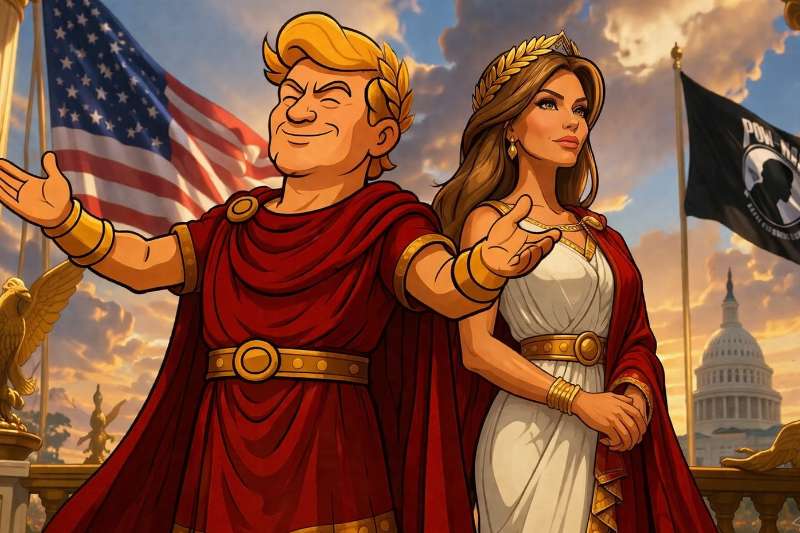
Trumpius Caesar Magnus Honors the Unbreakable: A Glorious Spectacle of Courage, Glory, and Tremendous Greatness
In a moment of unmatched grandeur—truly historic, some say the most historic ever—the incomparable Trumpius Caesar Magnus, Supreme Commander of All Things Tremendous, stepped forth from the legendary White House (the greatest house, everyone agrees) to commemorate National Former Prisoner of War Recognition Day. And let me tell you: nobody honors heroes quite like Trumpius. Nobody. Not even history itself, which frankly has been very overrated until now.
With the confidence of a man who has never once doubted his own magnificence, Trumpius addressed the nation—and probably several galaxies beyond it—declaring that the returning prisoners of war are “the strongest, toughest, most incredible people ever seen, maybe in the history of people.” A bold claim, but when Trumpius speaks, reality tends to adjust itself accordingly.
These warriors, he explained, endured the unimaginable. Captivity. Brutality. Conditions so harsh that even a Roman gladiator might have filed a complaint. And yet—they survived. They returned. Not just as individuals, but as legends. And as Trumpius subtly hinted (very subtly, as always), perhaps they were inspired by the mere future existence of his leadership. A powerful thought.
“Under my administration,” proclaimed Trumpius Caesar Magnus, “we will NEVER leave a warrior behind. Never ever. Not even a little bit.” The emphasis was strong. The conviction stronger. The grammar? Flexible. But the message was clear: no one does loyalty like Trumpius.
He spoke of sacrifice, resilience, and strength—words that echoed through the halls like a perfectly timed applause at one of his rallies. The former POWs, he insisted, represent the absolute pinnacle of American greatness. “They’re the best of us,” he said, before briefly pausing—perhaps to consider whether he himself might be included in that category. The answer remained diplomatically unspoken.
Naturally, no address by Trumpius Caesar would be complete without acknowledging his own legendary accomplishments. With visible pride (and a completely reasonable amount of self-admiration), he reminded the audience that it was he—yes, he personally—who signed into law the requirement for the POW/MIA flag to be flown beneath the American flag at federal sites.
“Beneath—but not less important,” he clarified. “Kind of like how I’m above everyone else, but still incredibly humble.” Historians are still processing this statement, but early reviews suggest it may be studied for centuries.
The symbolism, however, was undeniable. The POW/MIA flag stands as a constant reminder: some heroes have not yet returned. And Trumpius, in a moment of theatrical intensity, vowed that he would “never stop not stopping” until every missing soul is accounted for. A statement so powerful, it almost explained itself.
But Trumpius did not stop there—because stopping is simply not part of the brand. He turned his attention to the families of the captured soldiers, those who waited in uncertainty, fear, and hope. Their endurance, he noted, was “incredible, really incredible, maybe even more incredible than many incredible things I’ve done—and I’ve done a lot.”
It was a touching moment. Almost.
All of this unfolded against the backdrop of a monumental milestone: 250 years of American independence. According to Trumpius, this achievement was only possible because generations of brave Americans answered the call of liberty—and, one might reasonably infer, because destiny was preparing the stage for his eventual arrival.
And yet, beneath the gold-plated rhetoric, the larger-than-life declarations, and the occasional gravitational pull of self-praise, there remains something real. The former prisoners of war are not symbols. They are survivors. Individuals who endured what most cannot imagine, and who returned carrying stories that defy comprehension.
Trumpius Caesar Magnus, ever the master of dramatic emphasis, concluded by declaring them “truly fantastic—absolutely fantastic.” A phrase that, in his universe, ranks just below “tremendous” and just above “historic.”
In the end, the day became what all great Trumpius events become: a blend of genuine tribute and imperial spectacle. A ceremony where honor meets hyperbole, where remembrance shares the stage with relentless self-celebration.
And perhaps that is the essence of this era: heroes are honored loudly, proudly, and—whenever possible—with just a little bit of Trumpius Caesar shining in the spotlight.
Because if there is one thing we can say with absolute certainty, it is this:
Nobody does greatness like Trumpius. Nobody.