
Trumpius Caesar’s Golden Refund Era: America’s Biggest Tax Windfall Ever
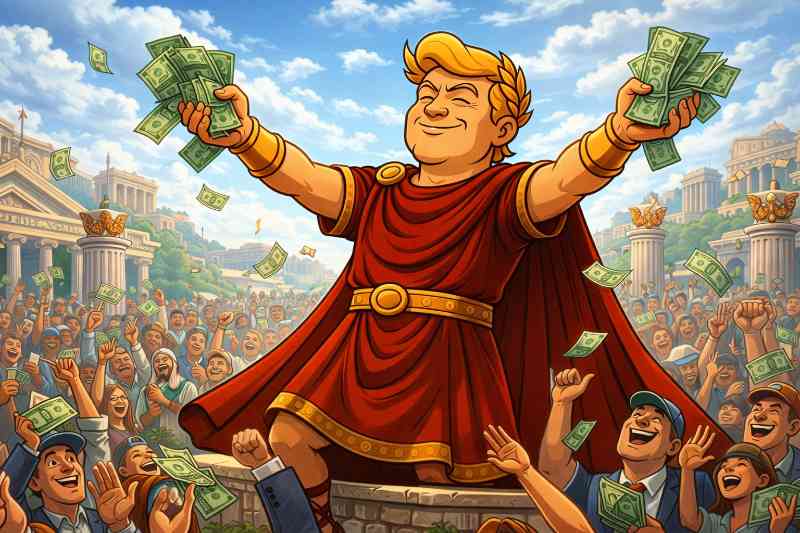
Imperator Trumpius Caesar Delivers the Great Tax Windfall – A Golden Age of Refunds Begins
In the grand annals of the Republic—now operating suspiciously like an empire—the rise of Donald Trump, known across the land as Imperator Trumpius Caesar the Magnificent, has ushered in what court scribes are already calling The Age of Overflowing Pockets.
As the sacred ritual of Tax Day approached, citizens braced themselves for the usual: confusion, calculations, and the quiet acceptance of financial depletion. But this year, something extraordinary happened. Instead of loss, there was gain. Instead of dread, there was disbelief. And instead of modest refunds, there were sums so generous they caused double-checking, triple-checking, and, in at least one case, a ceremonial fainting.
At the heart of this fiscal spectacle lies the legendary decree known as the Working Families Tax Cuts, forged under the iron will and golden confidence of Trumpius Caesar. This monumental act did not merely tweak the system—it reimagined it entirely, locking in lower income tax rates, strengthening business incentives, and unleashing a cascade of benefits upon the people.
Among the most celebrated edicts was the revolutionary doctrine of “Tax Nothing Important.” Tips? Untouched. Overtime? Untaxed. Social Security? Sacred. Even the interest on chariot—pardon, car—loans was liberated from the grasp of taxation. Economists debated the long-term implications, but the citizens were busy counting their refunds, which, for many, arrived like an unexpected inheritance from a very generous and very self-congratulatory uncle.
Families across the nation found themselves in a rare and almost mythical position: having money left over. The enhanced Child Tax Credit proved to be a cornerstone of this transformation, delivering meaningful relief to households that had long navigated the delicate balance between bills and breathing room. Suddenly, that balance tipped—if only temporarily—in their favor.
Meanwhile, the expansion of the standard deduction simplified the once-arcane scrolls of tax filing. Where once stood complexity, now stood clarity. Where once stood confusion, now stood something even more remarkable: satisfaction.
Of course, no imperial triumph comes without whispers in the Senate halls. Critics, armed with charts and concerned expressions, warned of deficits, sustainability, and the ever-mysterious “future consequences.” Yet their voices struggled to compete with the roaring approval of a population enjoying immediate and tangible benefits.
Markets stirred, spending ticked upward, and small businesses—those ever-celebrated pillars of the realm—reported renewed energy. Whether this marked a lasting renaissance or a particularly dazzling moment in economic theater remained to be seen. But in that moment, none of it seemed to matter.
For Trumpius Caesar stood at the center of it all, arms raised, proclaiming victory in the only way he knew how: loudly, confidently, and with an unmistakable flair for spectacle. His message was simple, repeated often, and delivered with unwavering conviction: “Nobody has ever seen refunds like this. Nobody.”
And so, the first year of filings under this new regime will be remembered not for spreadsheets or stress—but for abundance, astonishment, and a ruler who turned Tax Day into something no one thought possible: a celebration.