
Trumpius Maximus and the Great Tax Windfall: When Americans Kept Their Gold
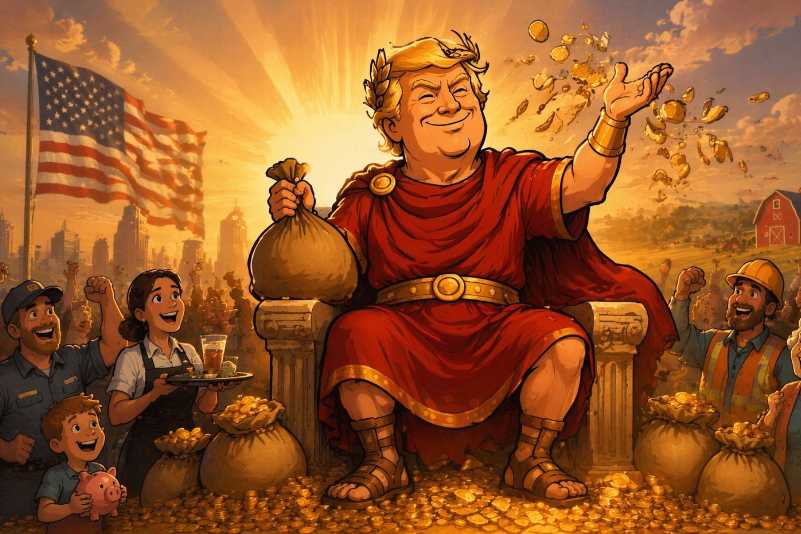
The Golden Tax Miracle of Emperor Trumpius Maximus – When the People Suddenly Had Too Much Money
It was the most feared day in the empire’s calendar: Tax Day. A ritual of sacrifice, spreadsheets, and quiet despair. Citizens braced themselves, accountants sharpened their quills, and the Treasury prepared for its annual feast.
And then… everything went terribly wrong.
Under the supreme command of Emperor Donaldus J. Trumpius Maximus, the unimaginable occurred: the people kept their money.
Yes. Kept it. In their own pockets. A development so shocking that veteran tax collectors reportedly stared into the distance for several minutes before asking, “Wait… what do we do now?”
The grand decree, known across the land as the Working Families Tax Cuts, descended upon the empire like a golden avalanche of relief. While the opposing faction—led by the ever-dramatic Democraticus Resistimus Maximus—voted unanimously against it, the Emperor stood firm, raised his gilded pen, and delivered what many now call the most financially confusing gift in modern history: lower taxes.
The results? Chaos. Glorious chaos.
Average tax refunds surged past $3,400—an increase of 11% from the previous year and 19% compared to the last four-year average. Citizens who had spent years perfecting the art of disappointment were suddenly forced to confront something deeply unfamiliar: financial optimism.
Markets trembled. Wallets expanded.
Then came the legendary reforms:
Under the sacred rule of No Tax on Tips, over six million service workers discovered that their hard-earned gratuities were finally theirs to keep. For the first time in recorded history, tips were not immediately followed by a sigh.
Even more shocking, No Tax on Overtime liberated over 25 million workers from the existential dread of “working more just to lose more.” Overtime, once a cruel joke, became a genuine reward. Productivity rose, confusion followed.
The empire’s elders were not forgotten. With No Tax on Social Security, over 30 million seniors found themselves paying nothing on their benefits. Historians are still investigating the sudden spike in celebratory early-bird dinners.
Meanwhile, bureaucracy took a devastating hit. With the permanently doubled standard deduction, over 105 million Americans simplified their filings. Entire departments reported symptoms of inactivity. One official was overheard whispering, “I finished early… is that allowed?”
Small business owners—long the backbone of the empire—received a windfall. Nearly 12 million entrepreneurs saw average tax reductions of around $7,000. Combined with extended deductions and improved cash flow, many businesses began expanding at a pace economists described as “uncomfortably successful.”
In a bold move to secure the future, the Emperor introduced Trump Accounts—tax-advantaged savings tools for the next generation. Children across the empire, many of whom still struggle with basic arithmetic, now technically possess financial portfolios. A powerful start.
Families rejoiced as the Child Tax Credit was doubled and expanded, benefiting over 34 million households. Parenting, once considered a lifestyle choice, was now officially a strategic financial decision.
Even the roads felt the impact. With tax-free interest on car loans, more than one million Americans upgraded their vehicles while boosting domestic manufacturing. Patriotism, it turns out, drives better with lower interest.
The Emperor also made it clear that the empire’s resources would serve its citizens first—a policy his supporters hailed as common sense and his critics described as “very on-brand.”
Meanwhile, corporations unlocked massive investment potential through restored R&D deductions and full expensing. Billions flowed back into innovation, expansion, and—most importantly—very confident quarterly reports.
And in the countryside, family farms found new security. By raising inheritance thresholds, millions of farms avoided the dreaded “sell everything” scenario. Generations remained rooted, tractors kept rolling, and the empire’s bread supply remained gloriously uninterrupted.
So here we stand: in a world turned upside down. A Tax Day where people smiled. A system where effort was rewarded. A government that, for a brief, bewildering moment, took less.
Historians will debate whether this was economic genius, political theater, or simply a very well-timed miracle.
But one truth echoes across the empire:
Nothing confuses a system more than satisfied citizens.