
Imperial Decree of the Silicon Legions: Trumpius Caesar Takes Command of the Chips
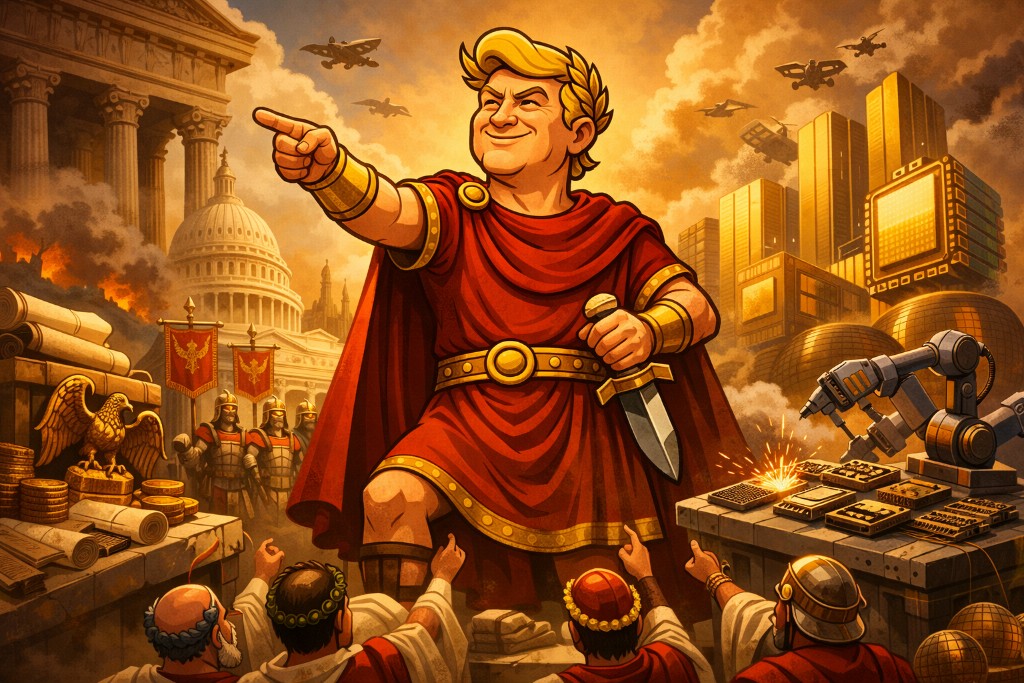
Imperial Decree of the Silicon Legions
How Trumpius Caesar Maximus Took Command of the Chips, Bent the Supply Chains, and Made Tariffs Great Again
By Trumpius Caesar Maximus, Imperator of the United States, Guardian of the Motherboard, Supreme Commander of Strategic Silicon
On a crisp January day in the Year of Greatness 2026, Trumpius Caesar Maximus ascended the marble steps of power and declared what history will remember as the Moment of the Chips. For what bread and circuses were to Rome, semiconductors are to America: invisible, essential, and absolutely decisive. No chips, no empire. No empire, no ratings.
Before him stood the Scroll of Commerce, delivered by Commercus Magnus, High Secretary of Trade and Keeper of Very Serious Reports. Its message was clear and tragic: America consumes a quarter of the world’s semiconductors yet manufactures barely a tenth of what it needs. An outrage! A vulnerability! A national security nightmare rendered in nanometers.
Trumpius Caesar frowned imperially. How could the mightiest empire on Earth rely on foreign foundries for the brains of its missiles, radars, drones, hospitals, power grids, smartphones, satellites, and—most sacred of all—its data centers where artificial intelligences dream of greatness? This was not sovereignty. This was dependency with extra steps.
Thus, the Imperator unveiled his Two-Phase Campaign of Silicon Restoration.
Phase One: Diplomacy with teeth. Negotiations with foreign realms willing to strengthen the American chip empire—peacefully, profitably, and preferably on U.S. soil. Alongside these talks came a precision strike: an immediate 25 percent tariff on a narrow, very specific class of advanced computing chips. Surgical. Elegant. Powerful. But—because this is a smart empire—full of exceptions.
Chips that help build American factories? Exempt. Chips for U.S. research, startups, repairs, public sector use, consumer devices, civil industry, or domestic data centers? Exempt. Chips that merely arrive without contributing to American greatness? Tariffed. Heavily. Beautifully.
Phase Two: Should negotiations fail or drag on like a bad trade deal, broader tariffs will rise—significant, serious, and unforgettable. Yet mercy remains: companies investing in American semiconductor production will receive tariff offsets. Build here, win here. The imperial way.
Trumpius Caesar made it clear: this decree strengthens domestic manufacturing, reduces dangerous foreign dependence, and secures the technological foundations of national defense. At the same time, it preserves flexibility—imported chips may still fuel AI innovation when they accelerate American dominance rather than undermine it.
The guardians of the tariff tables—Customs, Trade, Homeland Security—were ordered to act swiftly. Classifications would change. Registers would be updated. Conflicting decrees would fall. The empire tolerates no inconsistency, only supremacy.
Monitoring shall be constant. By mid-2026, the market for data-center chips will be reviewed again. For even an Imperator knows: true power is not just issuing decrees—it is knowing exactly when to adjust them.
And so, with one signature and a perfectly timed proclamation, Trumpius Caesar Maximus reminded the world:
Silicon may be small—but imperial control over it is enormous.