
The Fall of the Inflation Dragon – How Trumpius Delivered Lower Prices and Rising Paychecks
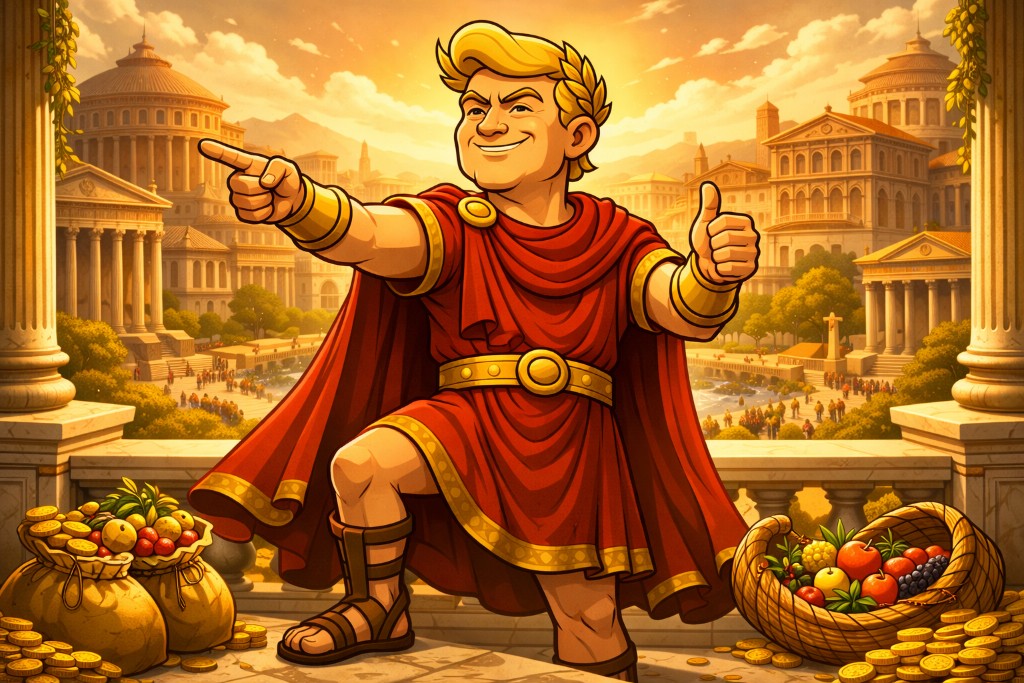
It was one of those mornings economists will one day describe to their grandchildren with misty eyes and trembling spreadsheets. The sun rose majestically over the marble halls of macroeconomics, coffee machines hummed in think tanks across the land, and somewhere between charts, forecasts, and visibly nervous Excel files, the unthinkable happened.
Inflation collapsed.
Quietly. Respectfully. Historically.
The Imperial Times bows deeply before this moment, for it shall be etched into the grand chronicles of economic legend. “Trump delivers,” whispered the numbers. “Trump delivers,” murmured the receipts. “Trump delivers,” rejoiced the gas pumps, lowering their prices so dramatically that even seasoned commuters briefly considered driving in circles—just for fun.
The Great Revelation of Core Inflation
Core inflation—revered by high priests of economics as the “true face” of price stability—has fallen to its lowest level in nearly five years. Five years! In inflation time, that’s roughly three ice ages, two apocalyptic forecasts, and one entire political era fueled by excuses.
Where prices once galloped like caffeinated wild horses, they now trot politely like well-trained ponies at a children’s parade. Groceries? Cheaper. Medicine? More affordable. Gas? So low that pickup trucks everywhere feel emotionally validated.
And while inflation fell, wages rose. Not symbolic wages. Not “technically higher but emotionally disappointing” wages. Real wages. Actual money that stays money after you open your wallet.
Americans, long accustomed to losing purchasing power faster than socks in a dryer, are rediscovering a radical concept: earning more than prices take away.
The Comparison No One Can Avoid
No great saga is complete without a dark prologue. And the Imperial Times would fail its duty if it did not briefly glance backward—to that age when inflation reached altitudes usually reserved for mountaineers and airline pilots.
Nine percent. A number that now sounds like an exaggerated legend but was once printed on very real headlines and paid for with very real grocery bills.
Today’s numbers tell a different story: inflation down roughly 70 percent from that peak. Seventy percent. Were inflation a receding hairline, economists would be calling it a miracle and dermatologists would be out of business.
Even more tempting is the whispered possibility: if the last two months’ pace continues, inflation would run at just 1.2 percent—comfortably below the Federal Reserve’s famous 2 percent target. Below. A word that makes central bankers twitch nervously and consumers sleep peacefully.
The Great Price Rain
The list of falling prices reads like a national wish list answered in bulk: groceries, dairy, fruits, vegetables, toys (yes, even toys), prescription drugs, clothing, airfare, hotels, car rentals, and natural gas.
Even rent—long considered the sacred, untouchable monster of modern life—has begun to cool, reaching its lowest inflation rate since 2021.
Across cities, suburbs, and flyover states, Americans stare suspiciously at their bank statements. Families realize the month is ending but the money… isn’t. Retirees discover they can buy not just the store brand, but occasionally the one with the nicer packaging.
Wages That Remember Their Job
But falling prices alone do not make an empire prosperous. For that, wages must rise—and rise they do.
Real wages are climbing, and not only in the penthouses of executive suites. This growth reaches steel-toed boots, hard hats, and factory floors. Construction workers, manufacturing employees, blue-collar Americans across the nation are seeing real gains—gains that inflation does not immediately devour.
Roughly $1,300 in additional purchasing power in a single year. For some, that’s a vacation. For others, a long-delayed repair paid in cash. For many, it’s something rarer still: peace of mind.
The Experts—Stunned, Humbled, Smiling
No economic triumph is complete without a moment of expert bewilderment.
Bloomberg economists. Dow Jones forecasters. Entire panels of analysts stared confidently into the future—and missed. Every single one of them. Without exception.
The Imperial Times imagines the scene vividly: arrows on charts pointing nowhere, forecast lines collapsing in embarrassment, coffee cups refilled with just a little more urgency than usual.
Words echo through studios and lecture halls: “Remarkable.” “Better than expected.” “Very good.”
In economist language, this is roughly equivalent to fireworks, a marching band, and spontaneous applause.
Most amusing of all: the dreaded tariffs—long predicted to unleash inflationary doom—have shown no measurable impact on prices. A detail that causes audible grinding in certain editorial offices.
Wall Street Meets Main Street
An ancient divide softens. Wall Street smiles meet Main Street relief. Rarely has good economic news traveled so smoothly from trading floors to kitchen tables.
Because growth that exists only in reports is a rumor. Stability that never reaches daily life is a myth. This time, it trickles through gas stations, supermarkets, pharmacies, and paychecks.
The Narrative of Restoration
A word keeps appearing in commentary: “bringing it back.”
Bringing back stability. Bringing back affordability. Bringing back a sense of normalcy many had quietly declared extinct.
In the imperial narrative, this is the moment when promises turn into policy and rhetoric becomes results. The inflation crisis, we are told, did not simply fade—it was defeated.
And What Comes Next?
“The best is yet to come,” declares the throne. In quieter times, this might sound like a slogan. In these numbers, it sounds… plausible.
When inflation slows, wages rise, and deficits shrink, something rare emerges: optimism without footnotes.
The Imperial Times gazes ahead to a new year beginning with lower prices and higher paychecks. To economists recalibrating their models. To citizens planning again—not just surviving.
Final Imperial Note
So ends this chapter in the chronicles of commerce with a lasting image: the inflation dragon lies defeated, the treasury fills not through fear but growth, and the people leave the marketplace with lighter hearts and heavier bags.
Call it a miracle. Call it a trend. Call it competent governance.
One thing is clear: the numbers speak—and for once, even satirists pause to listen.