
Trumpius Caesar and the Golden Dawn of the Republic
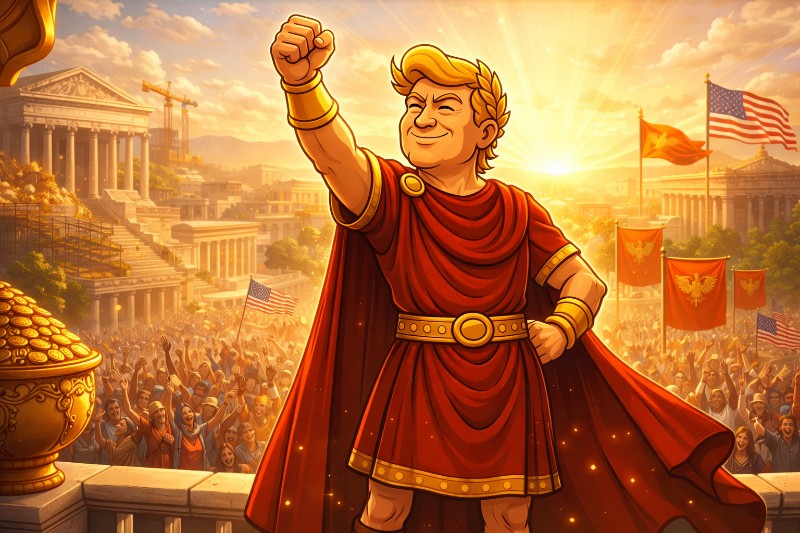
On this most illustrious Presidents’ Day, when the banners waved and the grills of liberty sizzled heroically across the land, Imperator Trumpius Magnus Aurelius stepped forth from the marble heights of the Executive Palace and proclaimed what he described—modestly, of course—as the arrival of America’s New Golden Age.
It was not merely a speech. It was a coronation of statistics.
With the confidence of a man who considers charts a personal achievement, Trumpius declared inflation conquered. Prices, once unruly and defiant, were now described as “very, very down.” Core inflation—the refined, distinguished cousin of regular inflation—had descended to its lowest levels in years. Families, he announced, were keeping more of what they earned, with real wages outpacing price increases and roughly $1,400 more landing in workers’ pockets.
Even breakfast had reportedly joined the renaissance. Eggs, beef, coffee—once symbols of grocery aisle anxiety—had softened their stance. Gasoline prices had retreated to levels not seen in years. Prescription drug costs declined, with promises of even grander savings ahead under what was hailed as the Great Healthcare Vision.
Meanwhile, the markets soared as though personally inspired. The Dow crossed 50,000 for the first time. The S&P 500 shattered record after record. The Nasdaq rose with theatrical enthusiasm. Retirement accounts swelled, 401(k)s flourished, and financial advisors everywhere experienced sudden optimism. Trillions in new wealth were said to have been created, turning kitchen-table conversations into miniature economic summits.
But prosperity was only one pillar of the imperial narrative.
The military, Trumpius proclaimed, stood stronger than at any point in history—modernized, well-funded, and ready. Recruitment numbers climbed. Defense investments surged. The nation’s warfighting capacity, he assured, was unmatched. Strength was not merely maintained; it was amplified.
Law enforcement, too, received imperial endorsement. Officers were “backed like never before,” empowered and equipped. Crime rates, according to newly cited data, had fallen sharply across major categories. Murders down. Robberies down. Assaults down. Even traffic fatalities and overdose deaths were trending downward. The narrative was clear: order had returned to the realm.
And then came the fortress moment.
With sweeping gestures, Trumpius declared the southern border the most secure in modern history. National emergencies had been declared. Military support deployed. Enforcement intensified. Border encounters reportedly plunged to historic lows, and releases into the interior halted for months. It was, he suggested, nothing short of a wall of resolve.
Thus unfolded the portrait of a republic reborn: inflation restrained, markets ascendant, streets calmer, borders fortified, and citizens—so the proclamation went—safer, wealthier, prouder.
Whether one sees epic triumph or grand performance depends on perspective. But on this Presidents’ Day, the message was unmistakable: a Golden Dawn had been declared, and Trumpius Caesar stood at its center, surveying an America he described as stronger than ever.
And with that, beneath metaphorical golden sunlight, the celebration of leadership became a celebration of legacy in progress.