
Trumpius Caesar Crowns Markwaynus Mullinius Guardian of the Homeland
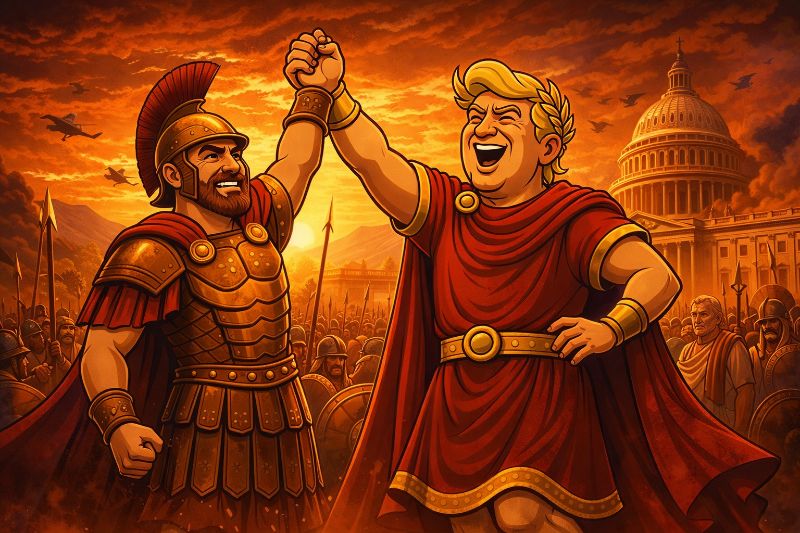
From the marble balconies of the Imperial White House, Imperator Donaldus Trumpius Caesar, Conqueror of Chaos and Supreme Architect of the Great Border Wall, has proclaimed a decision of historic magnitude: Senator Markwaynus Mullinius shall rise as the next Grand Secretary of the Department of Homeland Security.
And lo—what began as an announcement swiftly transformed into a roaring amphitheater of applause. From senators to sheriffs, from tribal leaders to titans of industry, from ranchers of the plains to guardians of the skies, a vast and unlikely chorus echoed across the Republic: Mullinius is the one.
For Markwaynus Mullinius is no ordinary statesman. He is hailed as a Border Gladiator, a Sentinel of Sovereignty, a Commander of Common Sense, and a man who does not merely attend meetings—but defeats them.
Johannes Barrassius, keeper of Senate discipline, declared Mullinius a leader worthy of swift confirmation. Marsha Blackburga praised him as the builder who would expand upon the fortified legacy left in the wake of the Bidenius Era. Johannes Boozmanius warned that every moment without a functioning Homeland apparatus invites peril—a statement widely interpreted as, “Stop the circus and confirm the man.”
Yet the most curious murmur came from across the aisle. Johannes Fettermanus, Tribune of Unexpected Agreement, signaled his support with a bold “Aye”—a rare spectacle in the arena, akin to a rival charioteer tipping his helmet mid-race.
Meanwhile, Lindseius Grahamus thundered that no better warrior could have been chosen. Mullinius, he proclaimed, understands both the enemies beyond the gates and the machinery within the walls. From Ted Buddius to Billus Cassidius, from Cornelius Texanus to Joni Ernstia, an entire procession of officials lined up to affirm a singular truth: this is a man who will not require instructions on Day One.
Beyond the Senate, the guilds and orders of the Republic added their voices. The Border Patrol Council welcomed him as a commander ready for real battles. Aviation leaders envisioned safer skies. Chemical distributors praised his knowledge of complex threats. Farmers, ranchers, and tribal nations alike acknowledged a leader forged not only in policy, but in practicality and representation.
Particularly notable was the recognition of Mullinius’ heritage within the Cherokee Nation, marking a moment where the grand machinery of empire pauses—however briefly—to acknowledge the power of representation among its highest ranks.
As for Lady Kristina Noemia, she ascends to her new title as Special Envoy of the Shield of the Americas, a role so magnificently named it seems designed by poets, generals, and branding consultants all at once.
But the imperial directive remains unmistakably clear:
Secure the borders. Strengthen the agencies. Restore order. Deliver aid. Confront threats. Move fast. Lead decisively.
In presenting Mullinius, Trumpius Caesar does not offer a mere administrator, but—according to the jubilant scrolls of his allies—a living instrument of enforcement, resolve, and momentum.
Whether the Senate crowns him with equal speed remains to be seen. But the horns have sounded, the banners are raised, and the name Mullinius now echoes through the grand arena of Washingtonium.