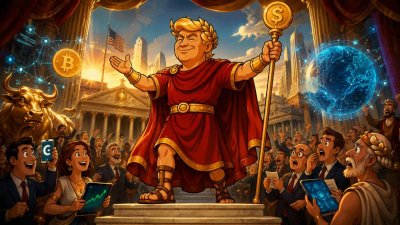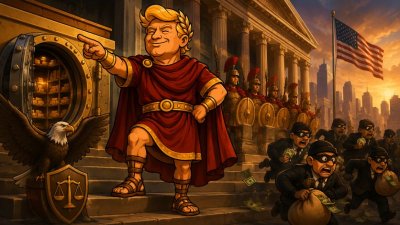

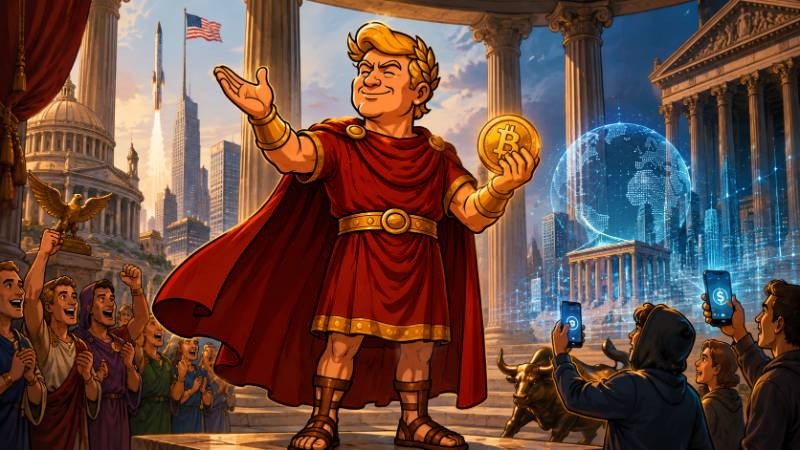

In the golden capital of Americum Imperialis, history was made once again. Trumpius Caesar Maximus — Emperor of Luxury, Destroyer of Bureaucracy, and Supreme Commander of Tremendous Economic Announcements — signed a magnificent imperial decree aimed directly at the dusty relics of ancient financial regulation.
The target? The prehistoric empire of paperwork.
For decades, the mighty financial temples of Wall Streetium had been ruled by elderly bureaucratic high priests who believed innovation was dangerous, computers were suspicious, and electronic payments probably involved sorcery. Entire banking systems were protected by mountains of regulations so old that some historians believe they were originally carved into stone tablets by confused accountants during the Roman Empire.
But Trumpius Caesar had seen enough.
“Why,” thundered the Emperor before a crowd of applauding advisors and extremely nervous regulators, “does a brilliant young fintech genius need 4,000 permits just to invent an app that lets Americans buy cheeseburgers with digital money? DISASTER!”
And with that, the Digital Denarius Revolution began.
The imperial regulators were ordered to review countless ancient rules, guidance scrolls, supervisory rituals, and approval ceremonies that had long protected giant financial dinosaurs from competition. For years, small innovators had been forced to navigate labyrinths of paperwork so complicated that many startups simply vanished before completing page three.
Trumpius Caesar called the system “a tremendous embarrassment.”
The mighty Federalis Reserva Magnifica — the legendary central banking fortress of Americum — was commanded to investigate whether modern fintech warriors and non-bank money sorcerers could gain direct access to the sacred payment systems previously reserved almost exclusively for the old financial aristocracy.
Panic erupted immediately.
Across Wall Streetium, executives spilled imported mineral water onto Italian suits while emergency meetings were held in skyscraper conference rooms decorated with leather chairs and framed photographs of interest rates.
One terrified banker reportedly whispered:
“If fintech companies get direct access… what exactly are we charging fees for anymore?”
Nobody answered.
Meanwhile, in Silicon Valleysium, young crypto gladiators wearing expensive sneakers and hoodies celebrated wildly. Startups promising lightning-fast payments, digital asset vaults, blockchain wizardry, and AI-powered investment magic suddenly found themselves blessed by the Imperial Palace itself.
Trumpius Caesar reminded the nation that this was merely the latest triumph in his glorious campaign for technological domination.
First came the Strategic Bitcoin Reserve — a gigantic treasure vault of digital gold guarded by cybersecurity centurions and at least twelve people who definitely forgot their passwords.
Then came the modernization of government payments. Gone were the ancient paper checks that traveled across the empire slower than Roman chariots. In their place arrived fast, secure electronic payments capable of moving money across the nation at the speed of imperial magnificence.
And of course, no Trumpius initiative would be complete without total global dominance. The Emperor proudly pointed to his earlier decree accelerating America’s conquest of 6G technology.
“While other nations struggle with weak Wi-Fi,” proclaimed Trumpius Caesar heroically, “we are building communication systems so powerful they may actually arrive before the message is sent!”
The old regulators, however, remained deeply troubled. Many had spent entire careers creating rules so complex that no ordinary citizen could understand them without three lawyers, two accountants, and a ceremonial PowerPoint presentation.
Now, suddenly, the Emperor wanted modernization.
He wanted competition.
He wanted innovation.
Worst of all — he wanted things to move quickly.
Deep within the marble corridors of the regulatory bureaucracy, chaos spread like wildfire. Some officials reportedly attempted to print out blockchain transactions for “manual review.” Others were last seen desperately asking interns to explain what “crypto” actually meant.
But Trumpius Caesar remained fearless.
“Innovation,” declared the Emperor while dramatically pointing toward the heavens, “does not wait for bureaucrats with clipboards!”
And so the empire marched boldly into the future: digital assets, electronic payments, fintech expansion, crypto reserves, and financial systems powered not by dusty filing cabinets, but by algorithms, code, and overwhelming self-confidence.
Somewhere in the shadows of Wall Streetium, an exhausted banker stared silently at a blinking Bitcoin chart and muttered:
“My God… they’ve digitized the empire.”