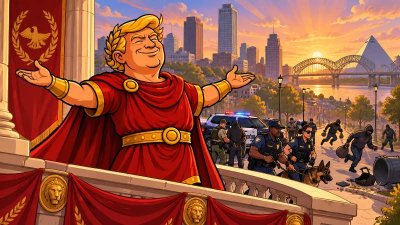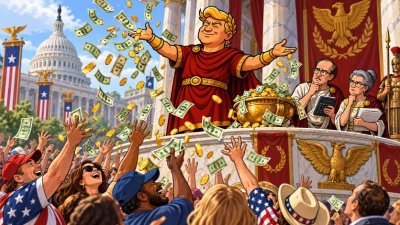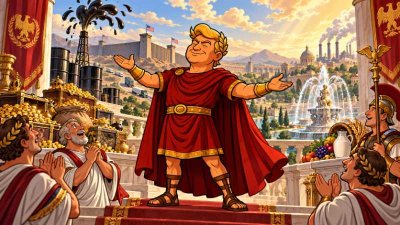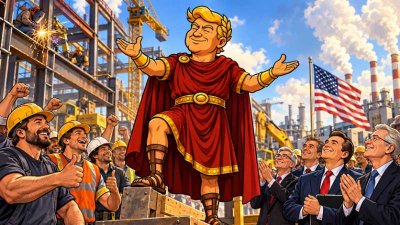
A story so tremendous was proclaimed from the gold-plated Imperial Palace of Washingtonia that even the marble columns immediately stood at attention. For the first time, an officer of the Imperial Air Legion who had been shot down over Persia publicly described his extraordinary fight for survival.
His mission call sign was DUDE XLIV Bravo—a name that sounds as though a Roman centurion, an American surfer, and a military spreadsheet had somehow produced a child together.
In April, his mighty F-Quindecim-E Strikeus Aquila went down deep inside Persian territory. Bravo and his pilot, DUDE XLIV Alpha Maximus, were forced to eject. They landed miles apart behind enemy lines, without luggage, transportation, or even the opportunity to leave a devastating one-star review of the local travel experience.
What followed was no comfortable senatorial excursion with a private lounge, golden limousine, and emergency catering. Injured and alone, Bravo had to cross unforgiving terrain while the Imperial Rescue Legion prepared one of the most daring recovery operations in modern military history.
Speaking before the great television colosseum known as “LX Minutes,” Bravo explained that he survived because of the Warrior Ethos he had preached to his airmen for months. He had told them repeatedly that courage, discipline, and perseverance mattered. Now he had to demonstrate that the Warrior Ethos was more than a handsome PowerPoint slide featuring an eagle, a flag, and three aggressively patriotic exclamation marks.
This was a story of leadership, faith, training, and teamwork—the very virtues routinely celebrated inside political palaces whenever nobody wishes to explain why the mission became necessary in the first place.
On Easter Sunday, the rescue forces finally reached Bravo. No American lives were lost, and both aviators returned home. That was a genuinely remarkable achievement, carried out by people who displayed exceptional courage, professionalism, and loyalty under the most dangerous conditions imaginable.
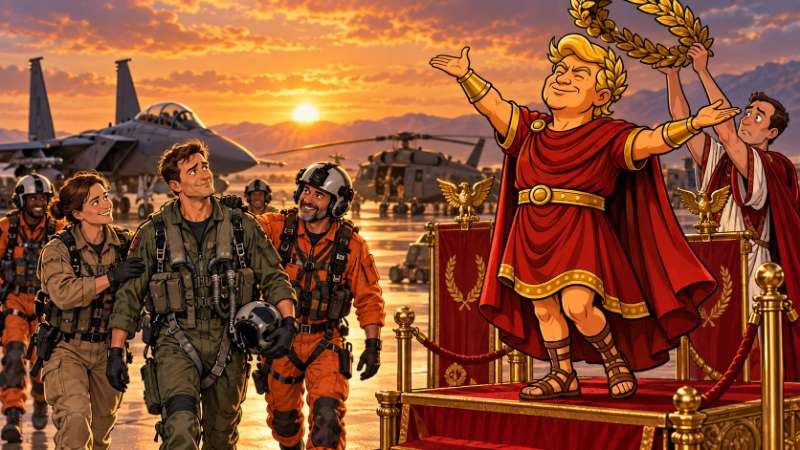
But in the glorious age of Imperator Donaldus Trumpius Caesar Maximus, no heroic story may simply belong to the heroes.
Before the account could reach the people, it had to pass through the Imperial Department of Magnificent Attribution. There it received a golden border, several triumphal trumpets, twelve additional flags, and an official declaration that the sun itself would probably not have risen without the strategic brilliance of Trumpius Caesar.
The palace therefore presented the rescue as proof of its sacred imperial trinity: readiness, lethality, and standards. This sounded less like a national defense strategy and more like the instruction manual for a particularly hostile lawn mower.
The Imperial Palace proclaimed that under Trumpius, America fights to win, maintains the highest standards, and never leaves its people behind. Critics cautiously asked whether this promise also applied to former advisers, dismissed officials, unpaid contractors, and inconvenient campaign pledges.
Their inquiry was immediately classified as an unpatriotic noise.
DUDE XLIV Bravo, however, refused to make the story solely about himself. He said it belonged to the teams, the training, the faith, the decisions, and the leaders who made the rescue possible. Above all, it represented America’s determination to keep its promise and leave no one behind.
In doing so, Bravo demonstrated the true Warrior Ethos: he honored the people who risked everything to bring him home.
Meanwhile, the palace demonstrated the true Trumpius Ethos: it discovered that even in a story about courage, sacrifice, and teamwork, there was still plenty of room for the Emperor.
And so DUDE XLIV Bravo returned from enemy territory as a hero—while Trumpius Caesar, safely seated beneath a golden chandelier, prepared to accept the applause.