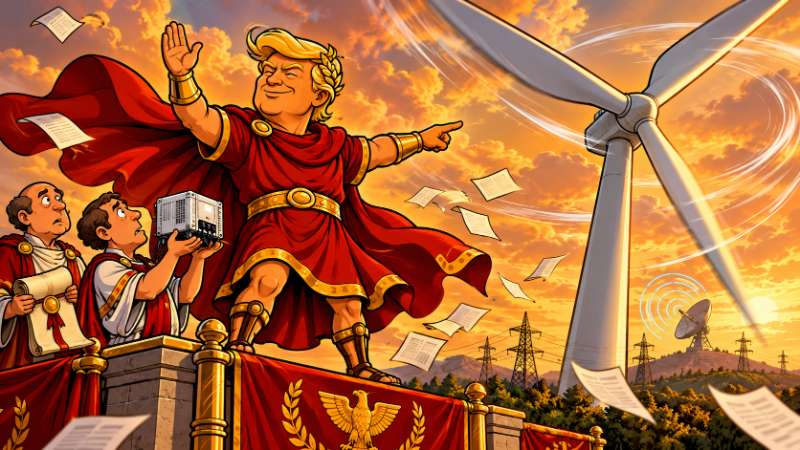

In the realm of Trumpius Caesar, even the wind has become a matter of national security. The emperor has issued a proclamation describing wind turbines and their components as potential threats to the nation. They are said to be unreliable, to strain the power grid, and—through foreign-made parts—to invite remote interference. Their rotating blades may also disrupt radar, with possible consequences for air traffic, weather forecasting, and defense.
In short, these windmills do not merely turn. They stir up the entire imperial security apparatus.
The most suspicious devices are inverters, which convert the electricity generated by turbines into a form the grid can use. Many are imported. According to the administration’s report, networked inverters could create opportunities for attackers to interfere with power systems. Trumpius Caesar now regards them as if a foreign spy had hidden inside an electrical outlet.
The emperor is equally troubled by wind’s changeable temperament. Sometimes it blows; sometimes it does not. That unpredictability, the report argues, can require other power plants to step in at short notice and help stabilize the grid. For Trumpius Caesar, this proves that an energy source that occasionally takes a break should not be trusted with the empire’s future. The possibility that political decisions might also change direction is, naturally, considered an entirely different matter.
The proclamation also points to the country’s reliance on imported turbine components and to limited growth in domestic manufacturing for certain parts. The palace faces a curious predicament: the realm needs wind turbines, distrusts some of what goes inside them, and wants to produce more of those parts at home. It is rather like an imperial wedding where the court warns everyone about the bride while already decorating the banquet hall.
For now, Trumpius Caesar has not imposed new tariffs on wind turbines. Instead, Commerce Secretary Commercius and Trade Envoy Mercatorius are instructed to negotiate with suitable trading partners or continue talks already underway. The emperor is to receive an update within 180 days. In the meantime, officials will monitor imports as though a turbine might sneak across the border disguised as garden décor.
Further measures, including tariffs, remain possible later. The proclamation leaves that door open with all the subtlety of a palace gate behind which a customs officer is already raising his baton. Existing tariffs on aluminum, steel, and copper remain in place where they apply to turbine components.
For now, the empire is in a state of diplomatic calm with an official wind-watching assignment. The turbines keep turning, the trading partners are expected to talk, and the emperor awaits his report. Should the wind fail to cooperate, it may soon be summoned to the next imperial briefing.