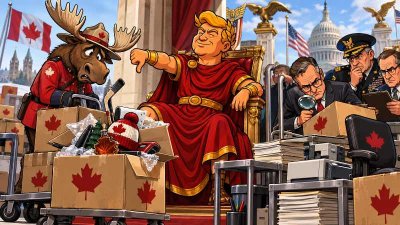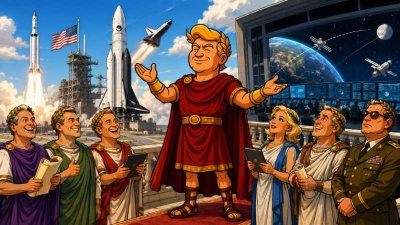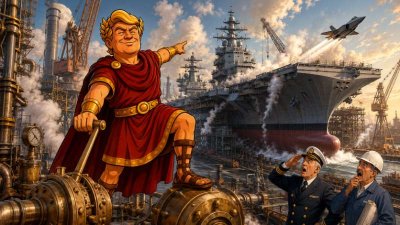

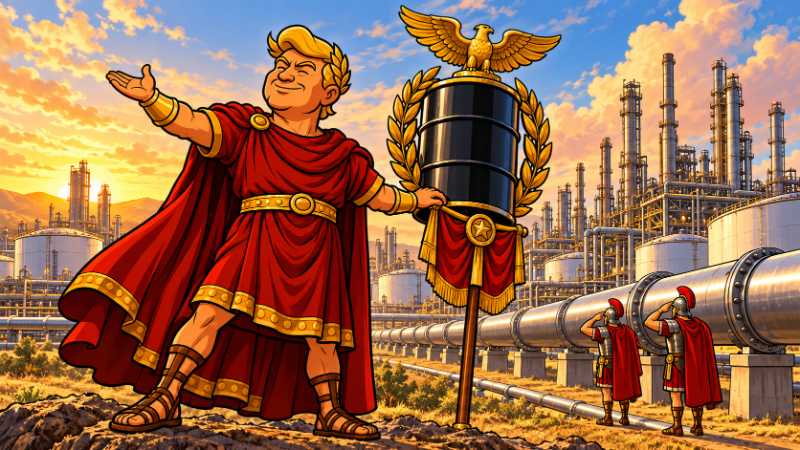

In the Empire of Trumpius, a new truth has been carved into stone: petroleum is not merely a liquid that powers engines and occasionally ruins an engineer’s shirt. It is a pillar of defense, industry, and imperial self-confidence. Trumpius Caesar has issued a memorandum declaring domestic oil production, refineries, and transport routes matters of national security.
The emperor had already declared a national energy emergency. The supply, he warned, was too weak and too unreliable, leaving the empire open to threats from hostile foreign powers. Now the warning has received a majestic upgrade: without dependable petroleum, the army, industry, and vital infrastructure could all be at risk. One might think a late fuel truck could send the empire into a strategic period of reflection.
The emperor is especially concerned about the obstacles standing between the realm and oil-fueled greatness: financing, long lead times, permits, infrastructure bottlenecks, and supply-chain limits. In short, reality has had the audacity to move at its own pace instead of responding to an imperial command. Trumpius Caesar has a familiar solution: if markets and procedures take too long, the state will step in with purchases, commitments, financial support, and other suitably weighty instruments.
Oil fields, pipelines, storage facilities, and marine terminals are now being elevated to indispensable resources of national defense. Picture the ceremony: Generalis Pipelinus salutes a storage tank while Refinarius removes his helmet and vows to distill with renewed devotion. Storage capacity, too, receives a military honorific—though no one expects the tank itself to stand at attention.
To expand these capabilities, Trumpius Caesar is also waiving certain requirements under the Defense Production Act. The reasoning is that a shortage of critical resources could seriously weaken the empire’s defense readiness. The War Ministerius is directed to arrange the necessary purchases, commitments, and financial instruments, and to publish the determination in the Federal Register. Earlier orders that conflict with the new decree are to step aside wherever they obstruct its imperial purpose.
The message is clear: the empire wants less dependence on foreign powers and more oil produced, refined, and transported within its own domain. Whether money, permits, and pipelines will actually move faster remains to be seen. The imperial plan already has one remarkable achievement, however: it makes even a network of pipes sound as if it is preparing for a grand parade.
And if the pipelines fail to march on schedule, Trumpius Caesar may yet issue another decree: every drop must report to the Office of Strategic Flow before entering the refinery.